Work · The Consultancy Group
Twenty-eight C-suite interviews, and not one of them reads like a recruiter.
Positioning, and a brand that stopped sounding like a recruiter.
- published interviews with C-level leaders
- 28 published interviews with C-level leaders
- URLs across five domains
- 343 URLs across five domains
- finance professionals surveyed for their salary guide
- 2,500+ finance professionals surveyed for their salary guide
In plain terms: twenty-eight C-suite leaders agreed to sit down and be interviewed by a recruitment firm. That is not something a competitor can buy in, and it is the reason the firm stopped sounding like a recruiter.
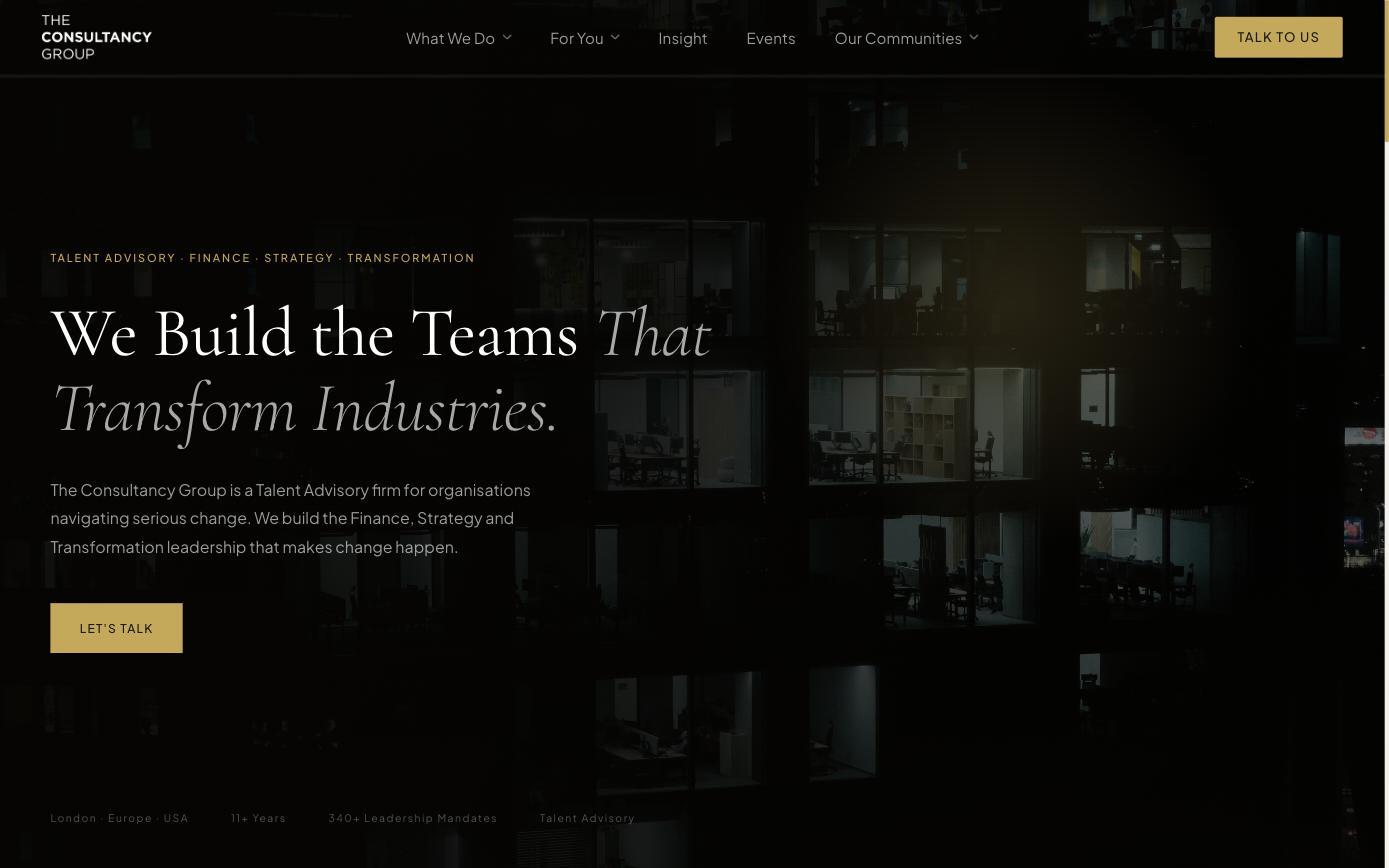 consultancygroup.com
 The situation. A recruitment firm founded in 2014, pitching against firms with a hundred, and looking, on paper, like every one of them.
What was wrong. Not the brand. The economics. Revenue came out of seven billing consultants’ personal networks, which means revenue leaves when consultants leave, and 70% of the staff turned over in two years. The firm sold four different things, finance, tax, transformation and strategy, from one generalist site, so a CFO searching for a tax director landed on a page that also talked about supply chain. Nothing qualified anyone. Nothing was worth an email address.
What we built. Four vertical hubs on their own domains: financejourneys.com, transformationjourneys.com, stratjourneys.com and taxjourneys.com. Each has its own services tree, job feed, category structure and blog, all footer-attributed to The Consultancy Group and cross-linked back.
- 343 URLs across five domains: 55 on the main site, 88 finance, 87 transformation, 80 tax, 33 strategy
- 234 article URLs, roughly 195 unique after cross-posting
- A job feed on every hub, built to be found rather than browsed. Each role page carries JobPosting structured data, which is what puts a role into Google Jobs instead of leaving it on a careers page nobody visits. Day rate, discipline and the consultant who owns it, on the card
- Two gated salary guides. Six fields plus two qualifying questions: do you hold hiring responsibility, and do you want a conversation about candidate availability. That second question is the entire point. It is lead scoring dressed as a download
- An invite-only CFO roundtable series: five “AI in Finance” events across a year, plus a board-level workshop. Seats are requested by emailing a named founder. The page says it plainly: “Most of our events are small and invite-only”
- 16 named client case studies, ungated, with real logos
The messaging, written down. The positioning work landed on a page of five principles rather than a page of values, and the difference is the whole job. A value is something anybody can claim. A principle costs you something. “Our consultants each work one discipline, and nothing else.” “We would rather refer a search elsewhere than deliver it poorly.” “Advisory first, placement second.” Read them next to any competitor’s about page and it is obvious which one had to be argued for internally before it could be published.
The part that actually elevated them. Twenty-eight published interviews with the people their market answers to: CFOs, international tax directors, transformation and strategy directors, CTOs, several of them at consultancy houses far larger than TCG. Filed under four editorial communities, headed “In conversation with the leaders shaping change”, and filterable by discipline: strategy 10, transformation 10, finance 5, tax 3.
Recruitment firms usually publish about recruitment. This publishes about the work those executives are actually doing, which is why they agree to sit for it, and why the firm now reads as a peer of the people it places rather than a supplier to them. Getting twenty-eight senior people to give up an hour is not a content exercise. It is the outcome of the messaging work, which had one rule running through it: nothing on any of these sites is allowed to sound like a recruitment agency.
The research underneath it. The Accountancy and Finance 2026 Market Insight and Salary Guide runs to thirty-two pages and is built on responses from more than two and a half thousand finance leaders and qualified professionals: media, retail, consumer, technology, hospitality, property and professional services, FTSE 100 companies through to scaling SMEs and high-growth start-ups. Eight sections, salary data and day rate ranges, and one finding the profession keeps circling back to, set as a full page in the guide itself: technology is no longer the real barrier to AI in finance. Skills are.
And a room, five times over. The AI in Finance series has run five times since July 2025, invite-only breakfasts in the City, with a board-level workshop alongside it under their sister brand. Ten CFOs at every one, from listed companies and PLCs through to fast-growth businesses and SMBs. Mandates came out of it. So did something harder to count: attendees wrote to thank the team for running them, and the conversations carried on afterwards. What it earned them in fees is theirs and not ours to publish.
And a sales kit, so the consultants have something to post. Seven billing consultants, none of them designers, all of them needing to be visible in their own market. So every one of them has their own set of cards: a new-role card, a let us connect card, LinkedIn content and a profile banner, each already carrying their name, their desk and their email. Pick a card, download the PNG, post it.
It is the least glamorous thing on the project and one of the most used. Personal profiles outperform company pages by a distance in recruitment, and the reason consultants do not post is almost never that they have nothing to say. It is that making something to post with takes forty minutes they do not have.
What it produces now. A searchable presence in four separate markets instead of one blurred one. A recurring event series that puts the founders in a room with CFOs. Two assets collecting qualified hiring managers every month. And the estate is still running a year later on an annual agreement, which is the part most agencies never get to.
The honest part. The firm is smaller than it was when we started. Everybody still there is billing, and the estate is the reason six people still turn up in four separate markets against firms twenty times the size. That is not the case study anybody plans to write. It is the one that is true, and it is a fairer test of what a digital footprint is for: not growth on its own, but the ability to keep competing in rooms a firm their size would normally never get into.
More of it
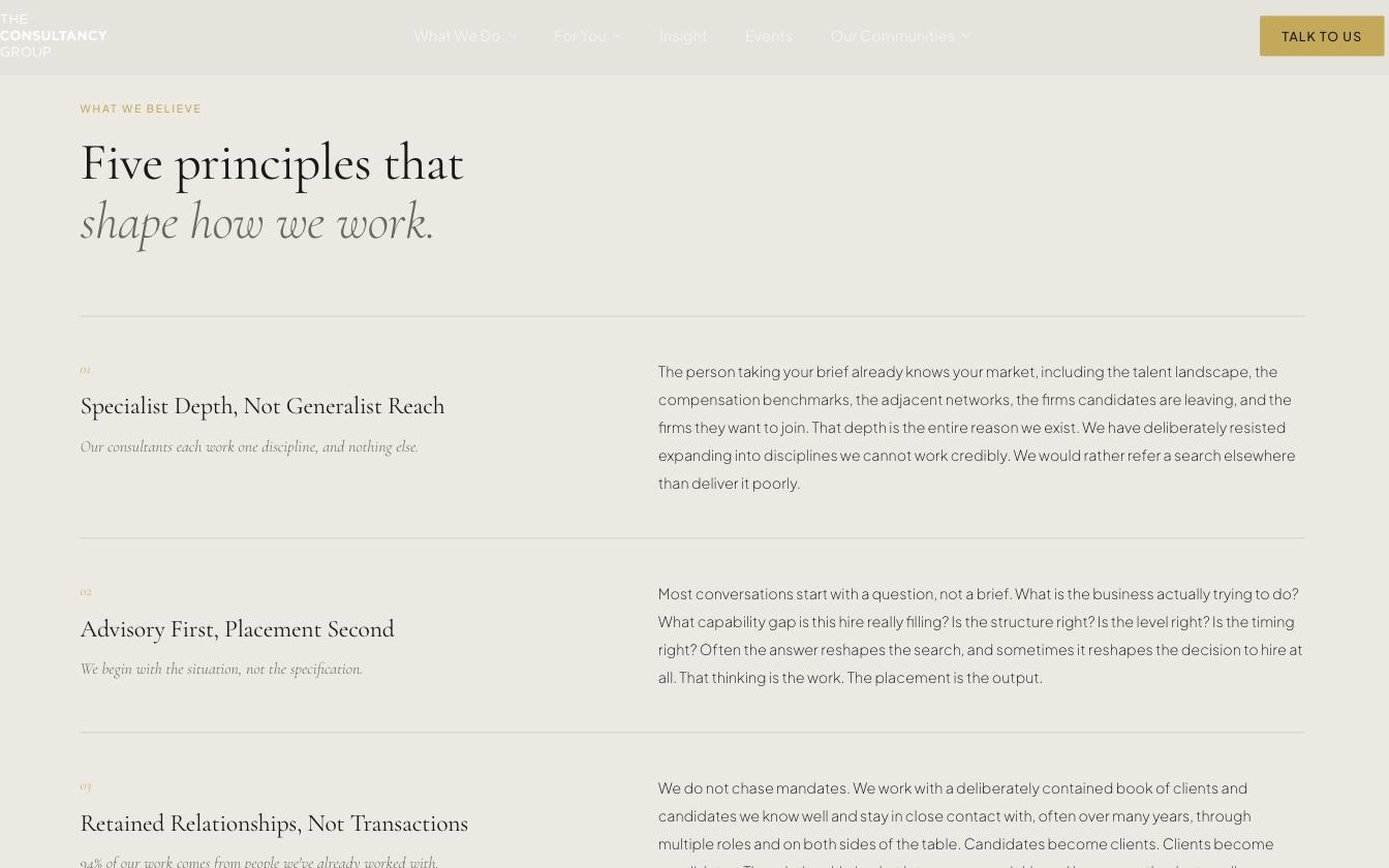 consultancygroup.com/who-we-are
 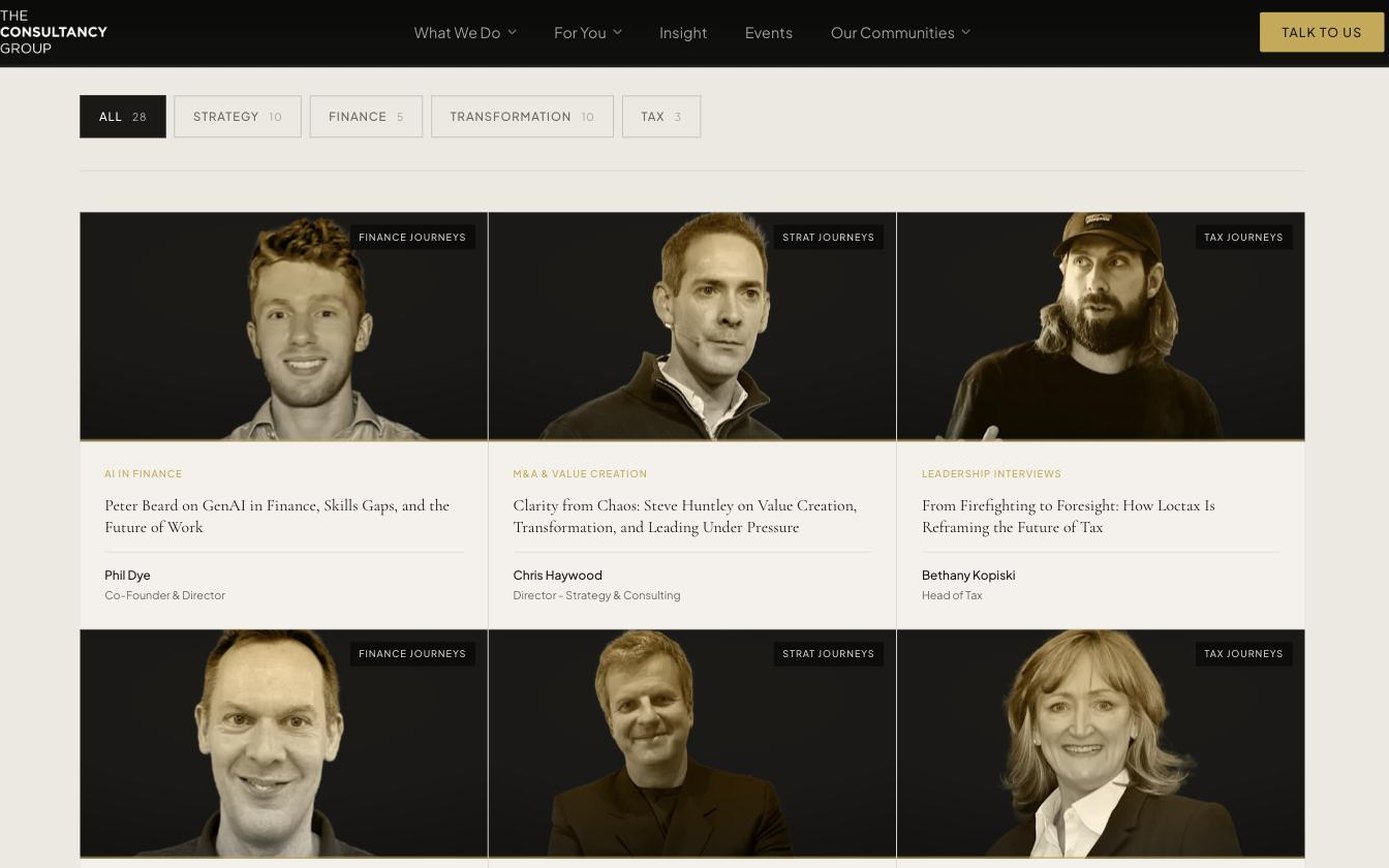 consultancygroup.com/insight
 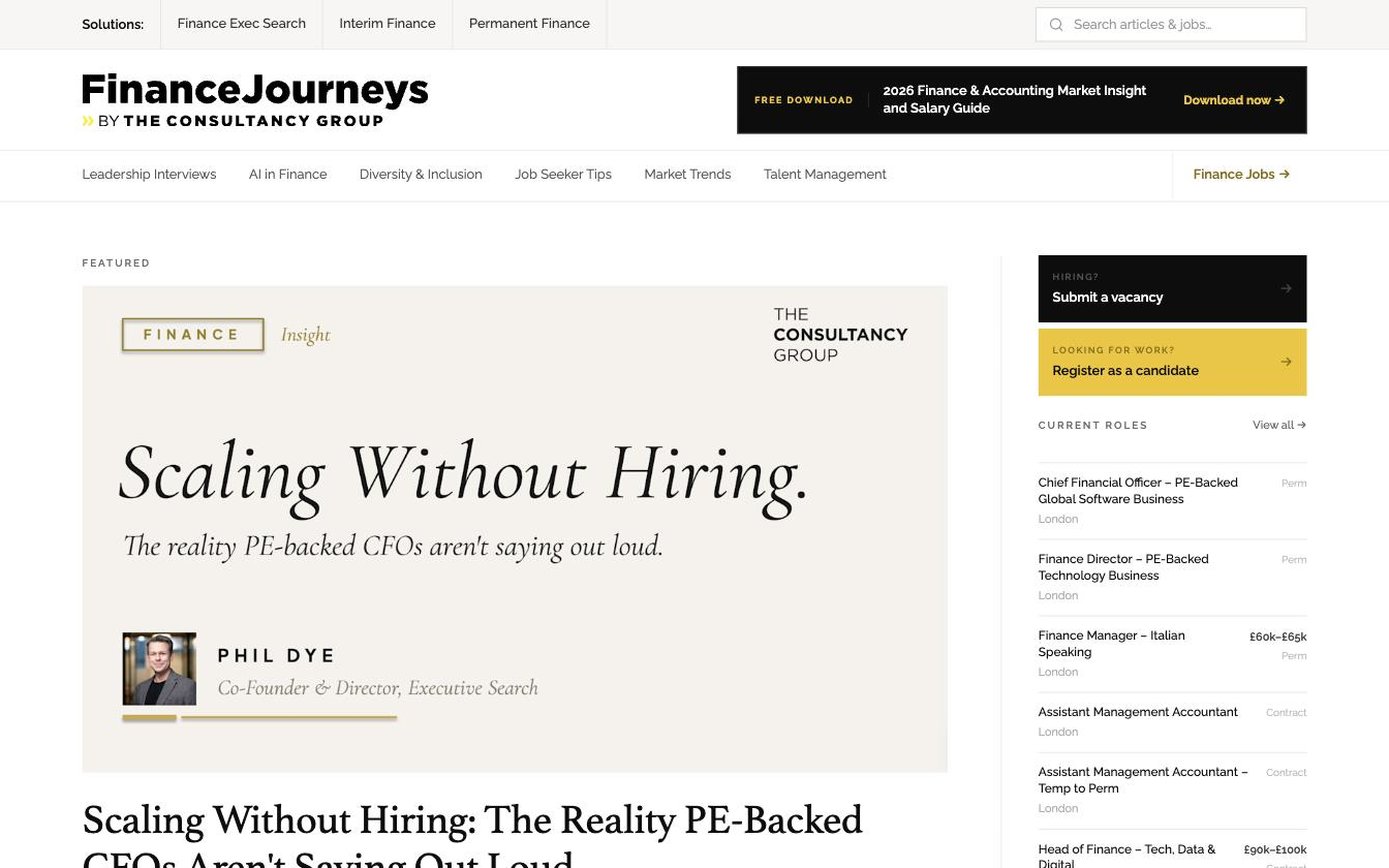 financejourneys.com
 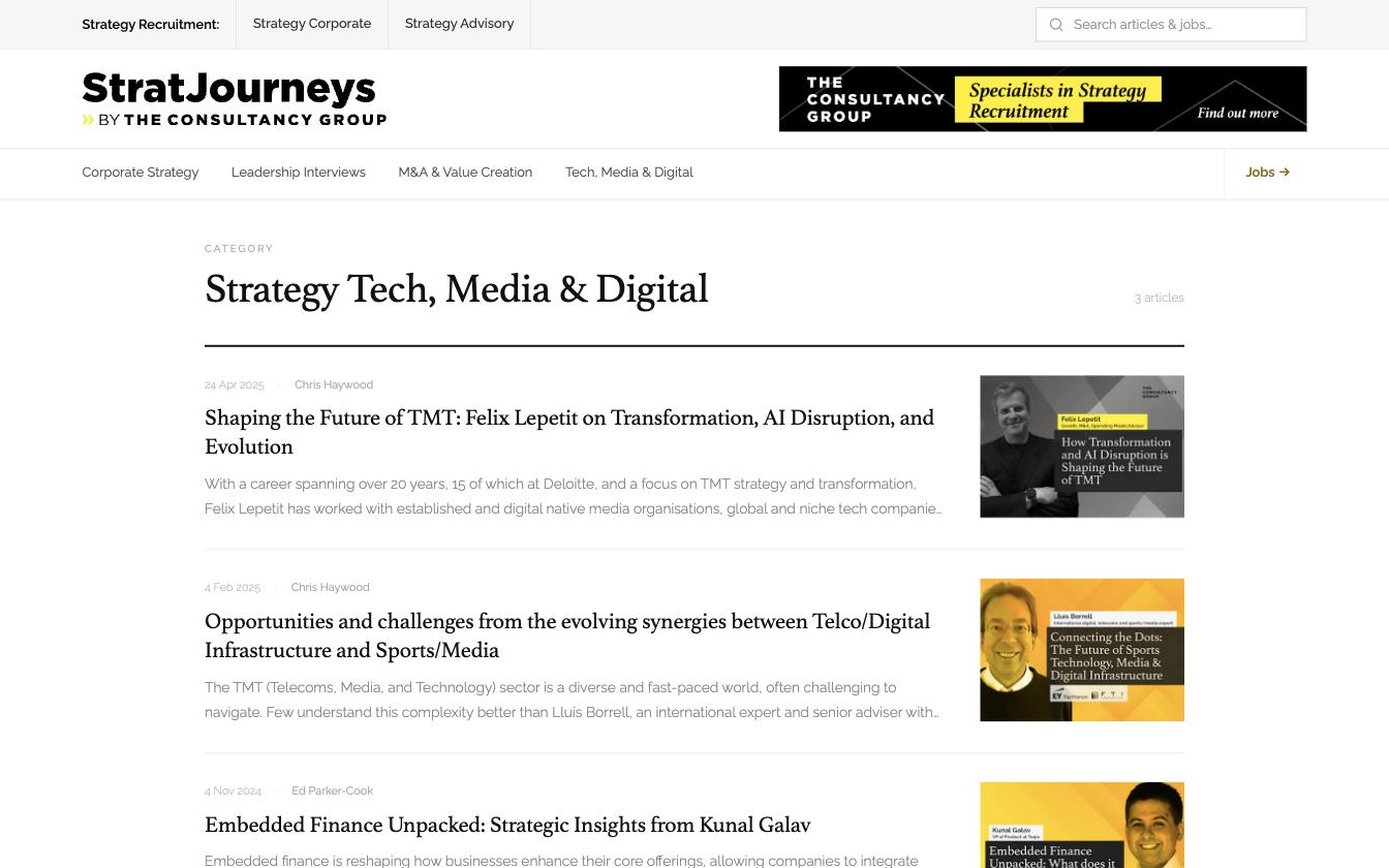 stratjourneys.com/categories/tech-media-digital
 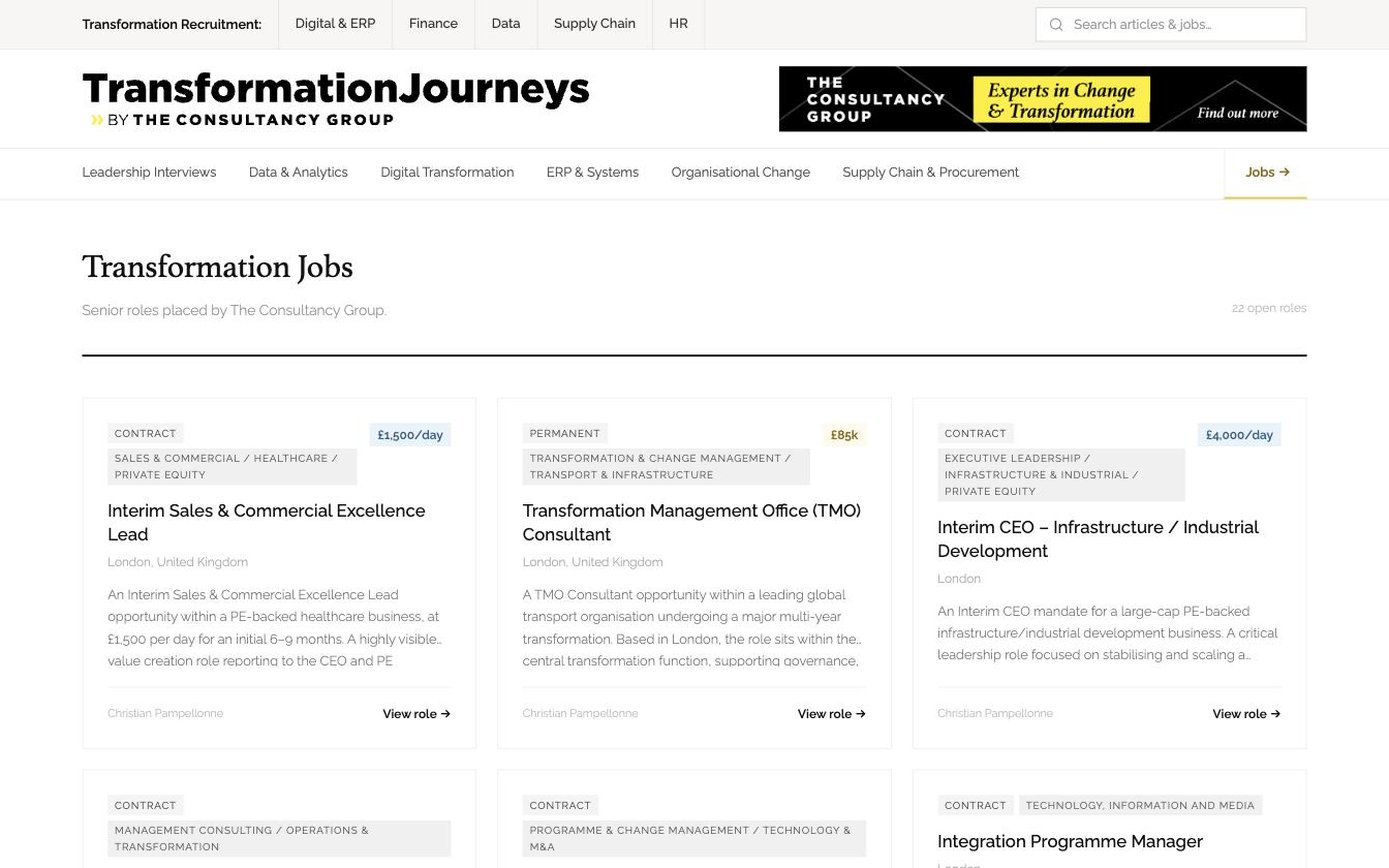 transformationjourneys.com/jobs
 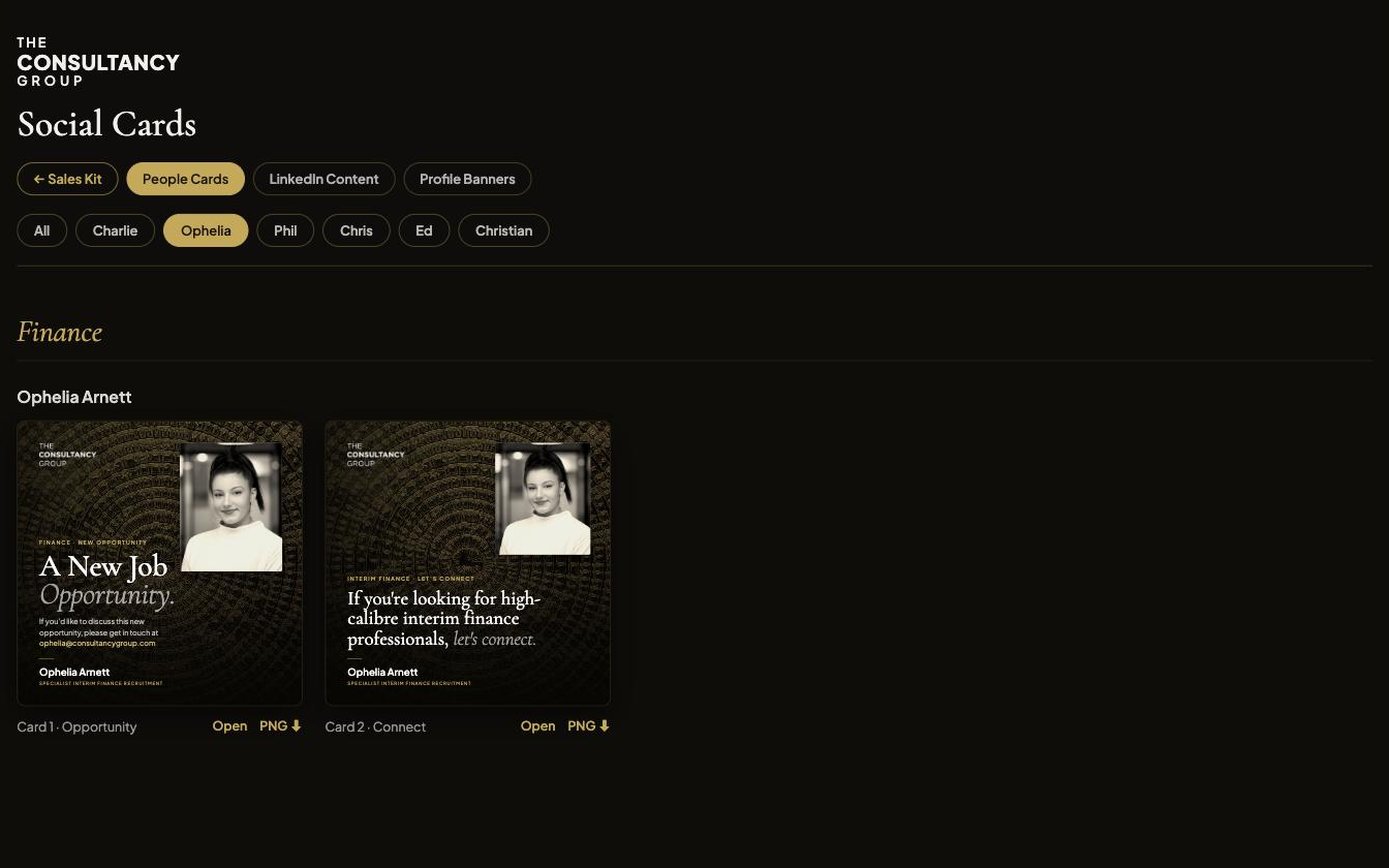 The sales kit
 What they said about it
He's completely transformed how we go to market.
Ricky delivers the strategy behind the Journeys platforms, which open doors to new clients.
What this was, in components
- Positioning & Messaging
- Website Build
- Insight Report
- Campaign Sprint
- Sales Toolkit
Everything we sell is priced as a component, so a build like this one is assembled rather than quoted as a lump. See what each of those costs →
The palette
-
#060503ground -
#c4a95agold -
#f5f1e8bone
Gold on near-black with a serif italic. Built to sit in front of CFOs rather than candidates.