Work · Synel UK
A ten-year-old site, and nothing on it a buyer could use.
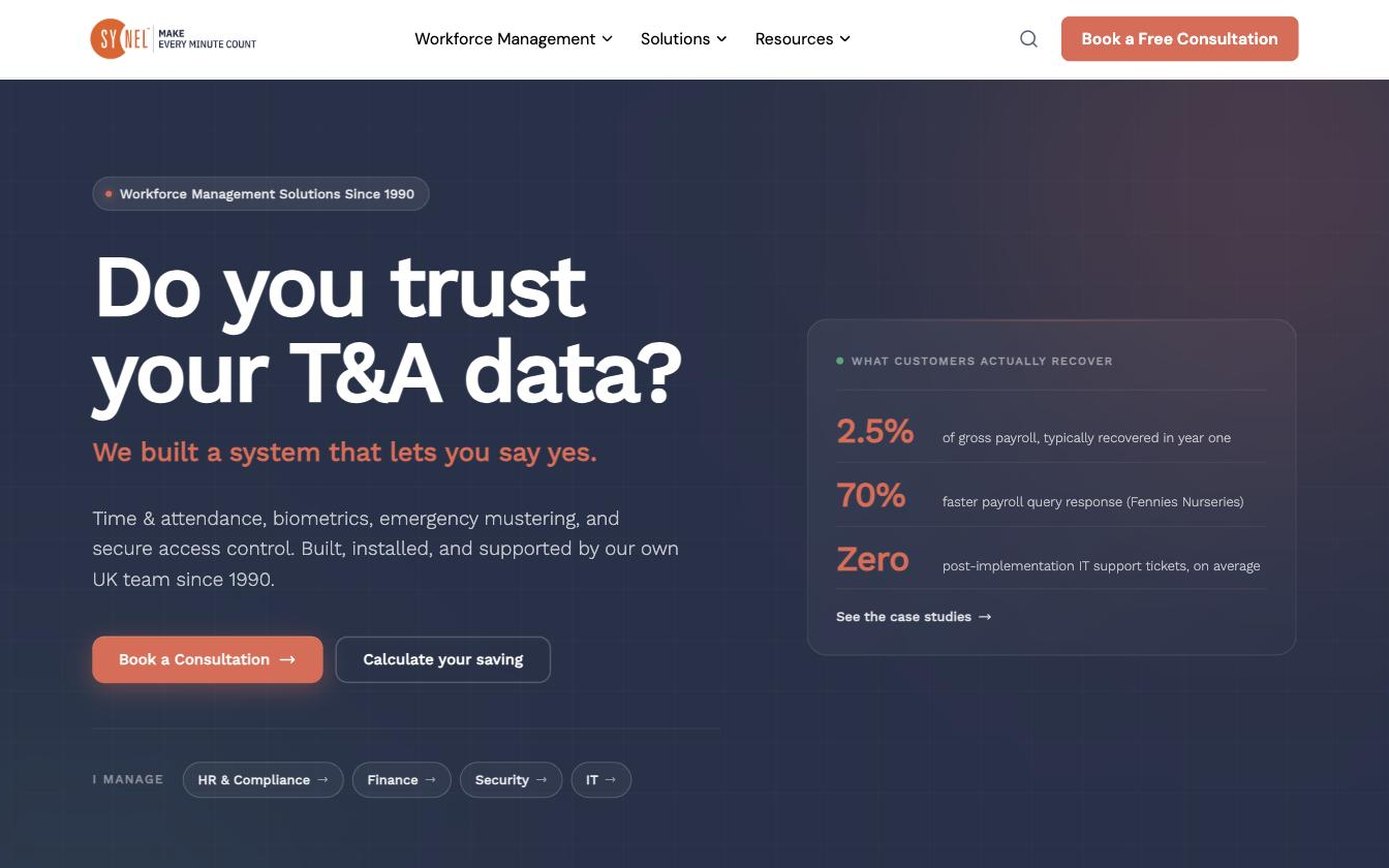
A migration that kept the rankings, then the conversion layer on top of it.
- existing website pages mapped and re-engineered, one at a time
- 270 existing website pages mapped and re-engineered, one at a time
- consultation requests since March
- 25 consultation requests since March
- of savings Synel's own prospects were shown by their calculator
- £559,315 of savings Synel's own prospects were shown by their calculator
In plain terms: a site that produced two or three enquiries a month now produces twenty-five consultation requests since March, from buyers who had already done the sums themselves before they picked up the phone.
 synel.co.uk
 The situation. Synel has sold time and attendance, access control and workforce management in the UK since 1990. Own software, own hardware, own engineers, three thousand customers. The website was ten years old and it was the weakest thing the company owned.
What was wrong. Two problems, and the second one is why the first one was hard.
It did not convert. There was nothing on the site a buyer could use before speaking to a salesperson, so the only route in was a contact form and the patience to fill it in. Consultations ran at two or three a month, in a market where a single deal is worth six figures over its life.
And it could not simply be replaced. Ten years of WordPress had accumulated hundreds of addresses that still ranked, still earned links and still had people arriving on them. Rebuild carelessly and you keep the design and lose the traffic, which is the most expensive way to get a new website.
What we built. In three parts, in that order.
- The migration. 270 existing pages, mapped and re-engineered one at a time, every one of them a 301. 102 blog posts moved under /blog/. 36 product and solution pages folded into the new hubs. 27 hardware pages. 18 category and archive pages. 11 legal pages. 5 case studies, 5 education pages, 30 loose ends, and 36 slugs corrected because the build had renamed them after the audit was written. The report that came out of it lists every redirect and also lists the misses: seven old pages with no equivalent in the new build, four case studies not yet rebuilt, sixteen posts pointed at the blog index until their replacements are published. Publishing the misses is the part that makes the rest of it trustworthy.
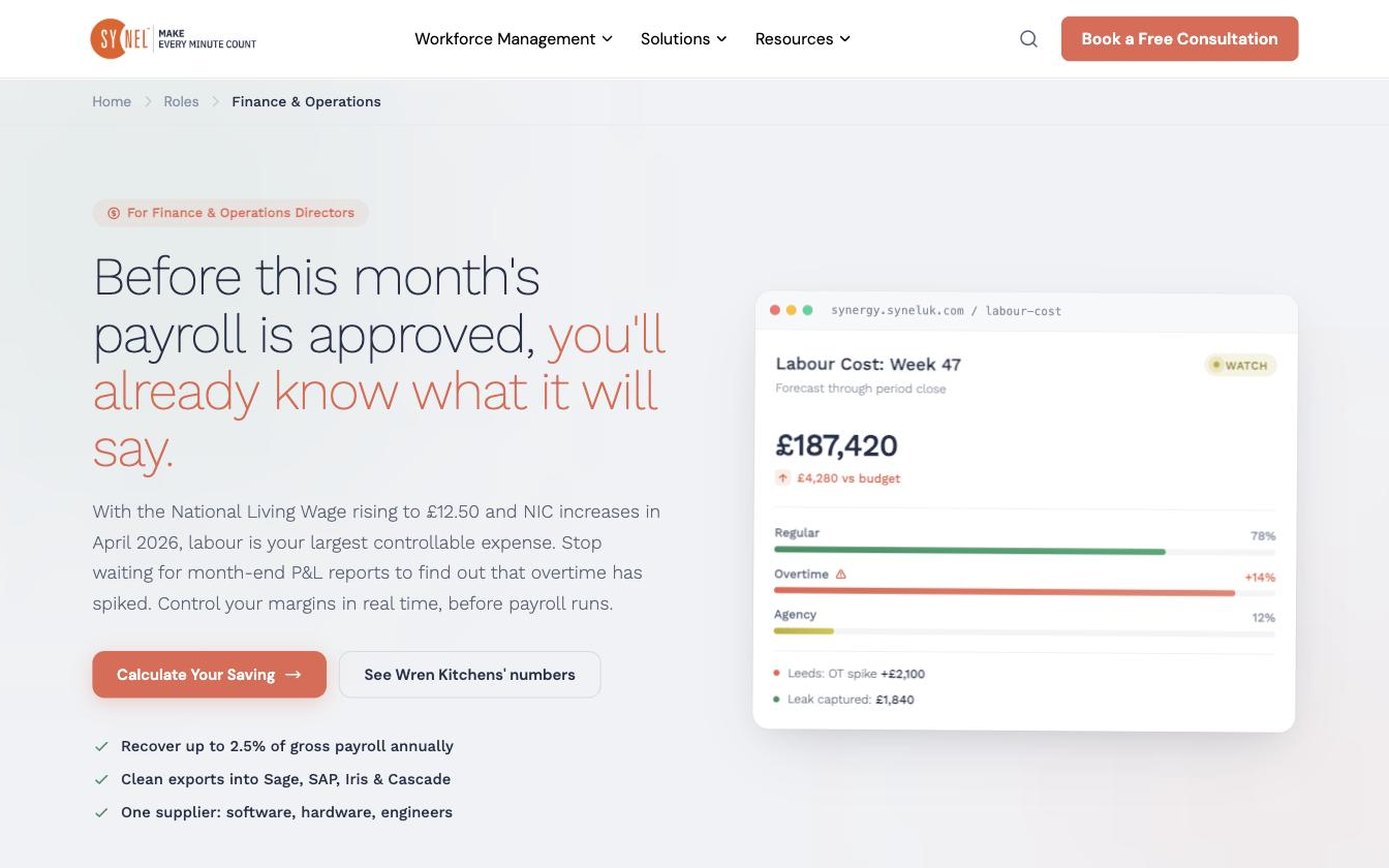
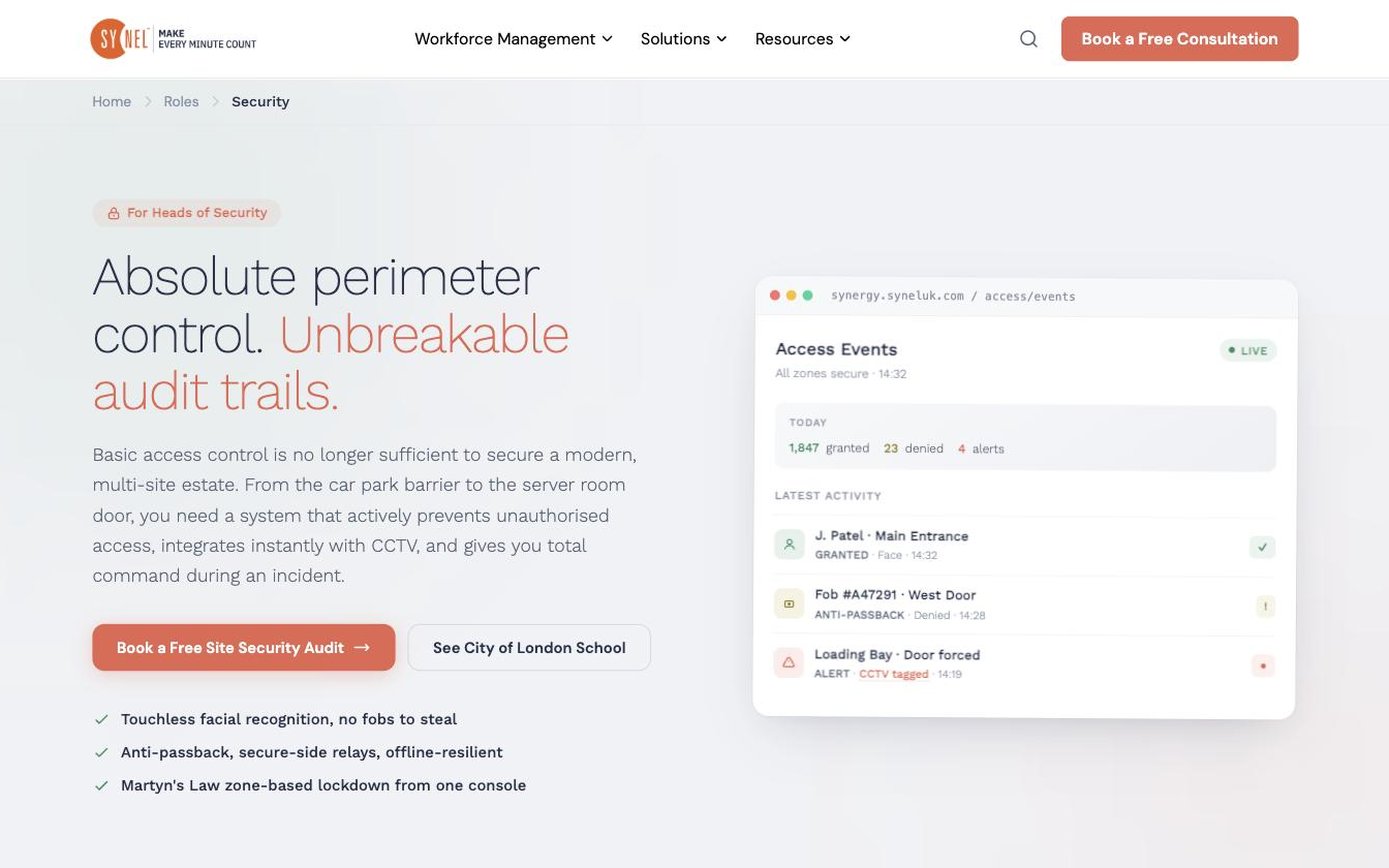
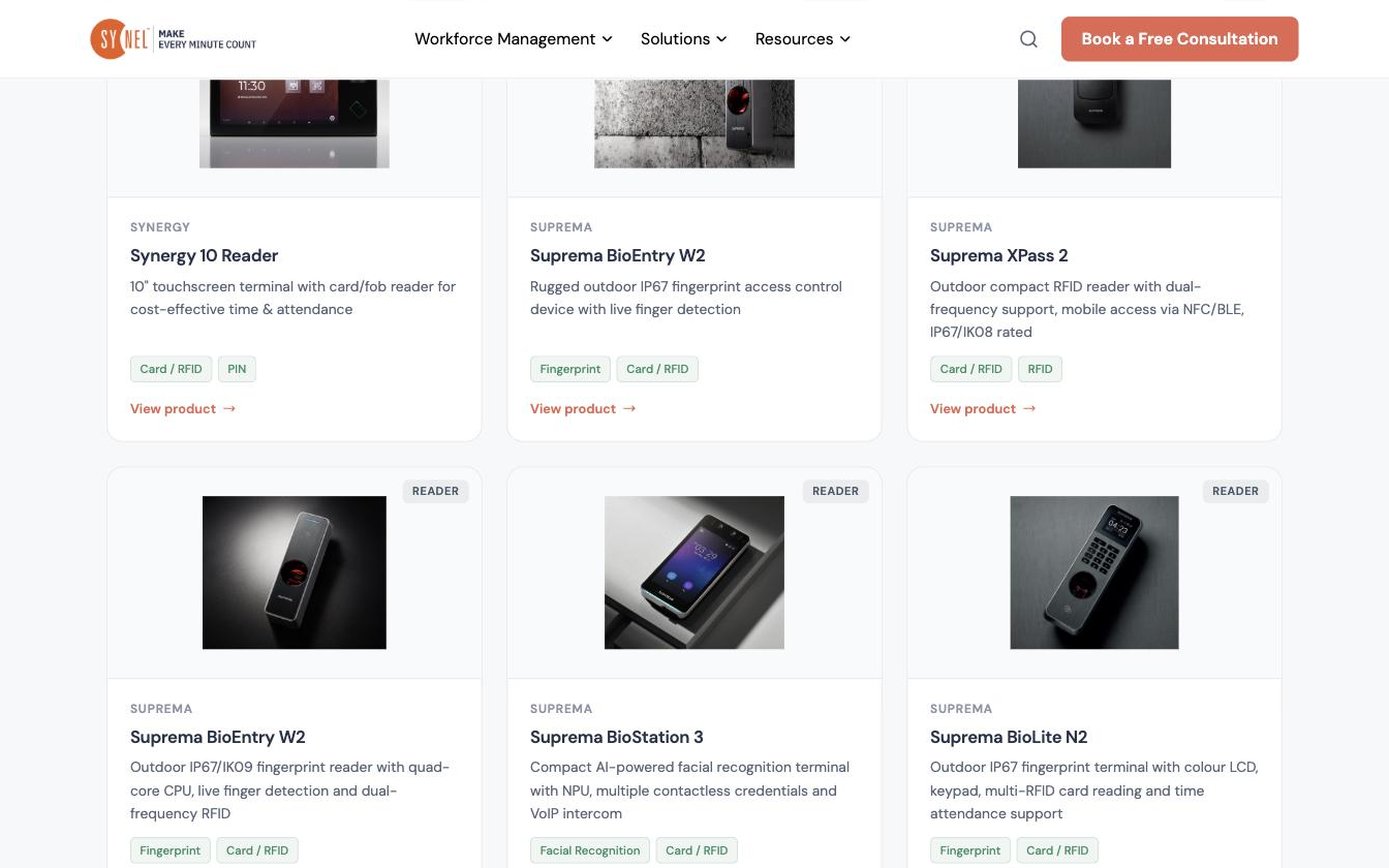
- The site. Hubs for time and attendance, workforce management, access control, emergency mustering, education and hardware, so a product finally has somewhere to live. The hardware range in particular, which the old site had been selling through a WooCommerce basket, became a catalogue wired into the solutions rather than parked in a shop: every device is a record in Contentful tagged with what it reads and what it is for, so the same reader appears on the door entry page, the fingerprint page and the facial recognition page, with its own specifications, and gets updated in one place rather than four. Then buyer pages that talk to the person rather than the product: finance and operations, HR and compliance, security, IT. The finance one opens “Before this month’s payroll is approved, you’ll already know what it will say.” The security one opens on perimeter control and audit trails, because that is what keeps a head of security awake at night.
- The conversion layer. An ROI calculator: pick your industry, answer three questions, and it gives you the number before it asks who you are. A payroll leak calculator next to it. A gated HR technology guide. A consultation route with a one working day promise attached to it.
Then a second site, in French. synel-france.com runs the same platform and the same rules for the French business, with its own leads landing in its pipeline generation.
What it produces now.
Since the forms went live in March, 25 consultation requests, arriving in 16 of 23 weeks. Against two or three a month before it, on a site with nothing to complete.
The ROI calculator has been finished four times by real companies, totalling £559,315 in savings they worked out for themselves. Their number, not Synel’s. The total is not really the point. The point is that four buyers sat and did sums on a supplier’s website, and then asked for a call, which is the entire job of a calculator.
The HR technology guide put sixteen downloads in the sheet in forty-eight hours.
One consultation request arrived carrying utm_source=chatgpt.com. Somebody asked a language model which time and attendance supplier to look at, and the answer sent them to a page we wrote.
And paid search is finally worth doing. Running ads at a site nothing converts on is an expensive way to prove a point, so it was not run. It is running now, against nine landing pages built for the campaigns rather than the ordinary product pages, and conversions are coming through it.
The plan came out of Synel’s own Search Console data rather than a keyword tool. Three months of it, turned into 120 keywords across three campaigns, manufacturing, time and attendance and access control, every one of them phrase or exact match with impressions already behind it. Fifty-seven negative keywords went in before a penny was spent, because the searches that look like a factory buying a clocking system are also schools, nurseries, houses and flats. Ads written per ad group rather than one set stretched across a campaign.
It is deliberately small. Fifteen pounds a day, still in the learning phase, with more effort going into keeping bot and junk traffic out of the data than into volume. If it reaches three pounds back for every pound spent, the argument for tripling it writes itself. Until then, that is the number, and a small number that is true is more use than a big one that is not.
More of it
 synel.co.uk/roles/finance
  synel.co.uk/roles/security
  synel.co.uk/hardware
 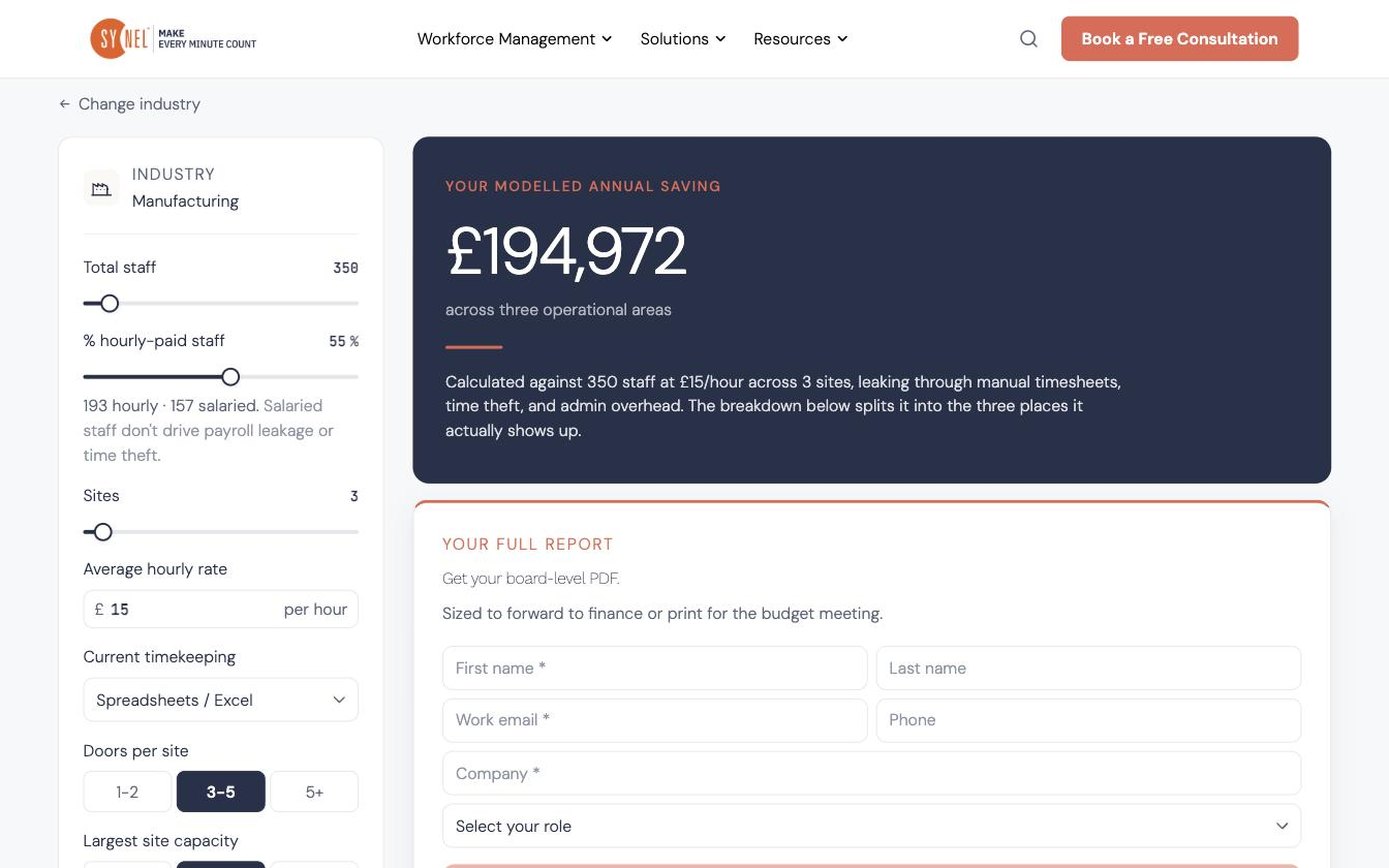 synel.co.uk/roi-calculator
 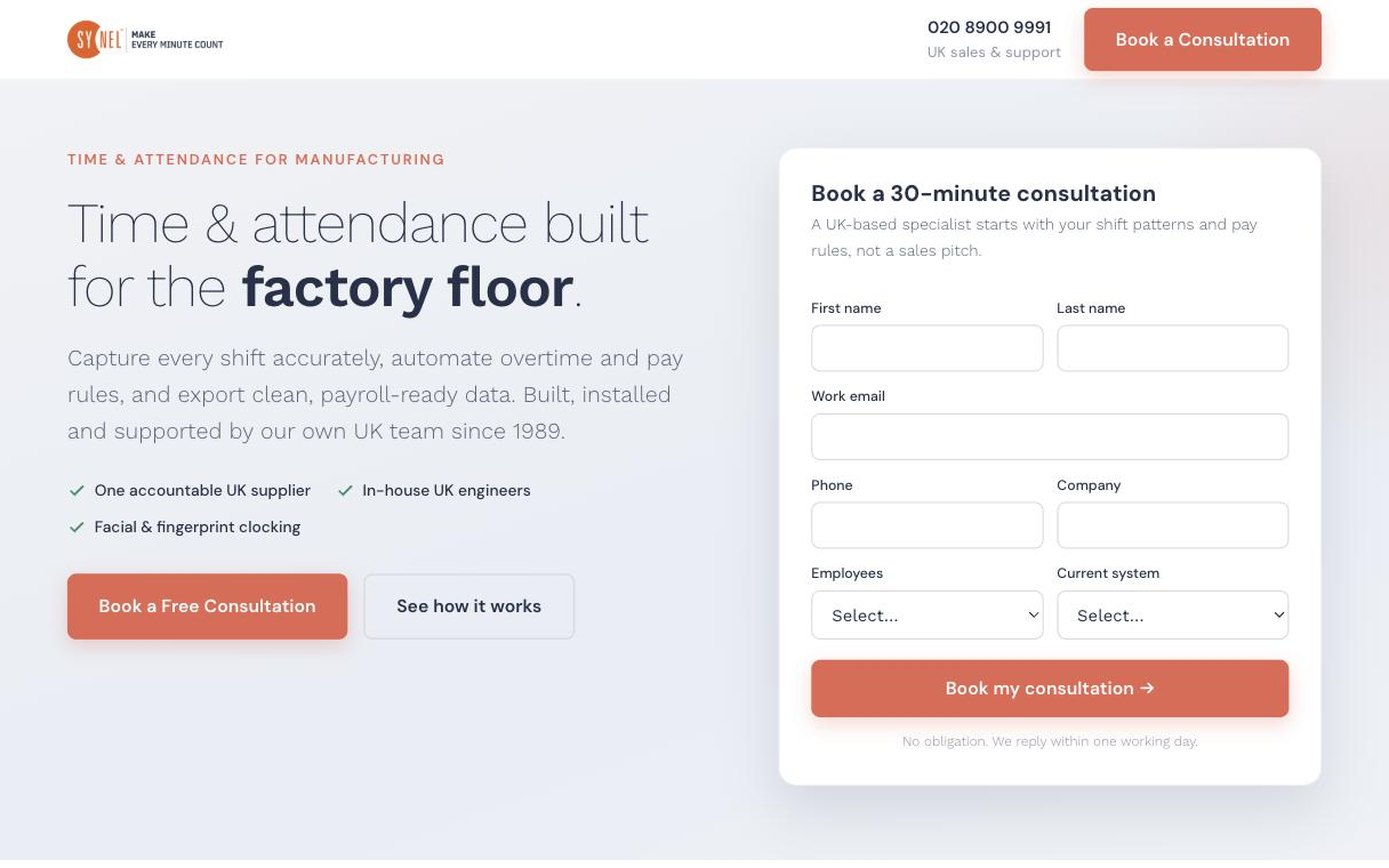 The paid search page
 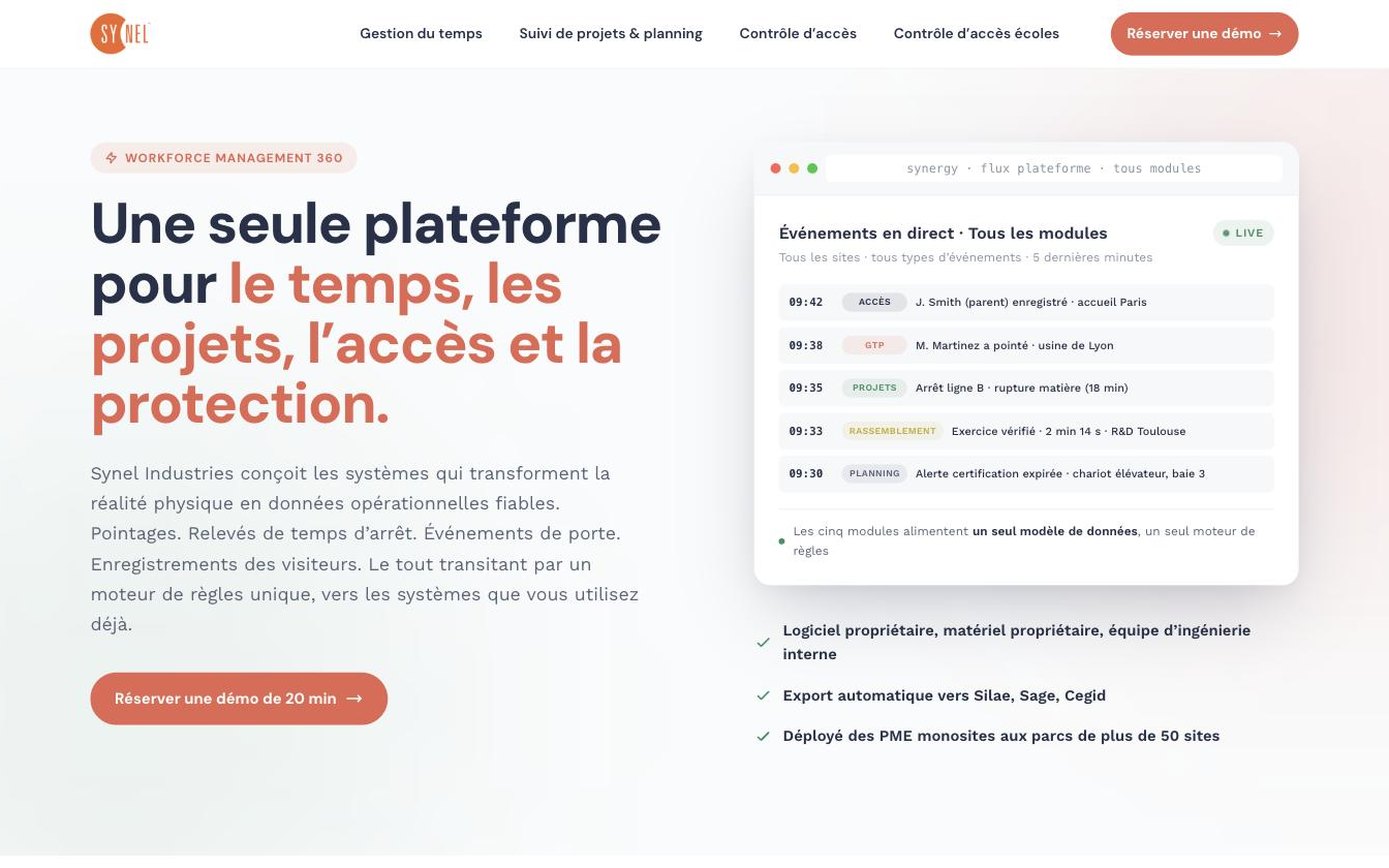 synel-france.com
 What this was, in components
- Website Build
- Estate Expansion
- Paid Search Sprint
Everything we sell is priced as a component, so a build like this one is assembled rather than quoted as a lump. See what each of those costs →
The palette
-
#29304anavy -
#d66d58coral -
#f7f5f2paper
The only identity here that had to survive a migration. The colours came with the company; nothing else on the old site did.